
NaI(Tl) scintillation crystal remains one of the most familiar materials in gamma-ray detection. It is not the newest scintillator, and it is not the densest, but it keeps showing up in real instruments for a simple reason: high light output, good energy resolution, mature PMT coupling and practical cost for standard detector sizes.
For comparison with other detector materials, review our scintillation crystal category covering NaI(Tl), LYSO(Ce), BGO, GAGG(Ce), CsI(Tl), CdWO4, LaBr3(Ce), BaF2 and LuAG(Ce).
For buyers specifying a sodium iodide scintillator or an encapsulated NaI(Tl) crystal, review the crystal geometry, sealing, optical window, reflector and interface to your photosensor. Define the crystal package separately from the photosensor and electronics so that quotations cover the same scope.
If you are comparing NaI(Tl) against other scintillators for gamma spectroscopy, the LaBr3(Ce) vs NaI(Tl) comparison is a useful next read.
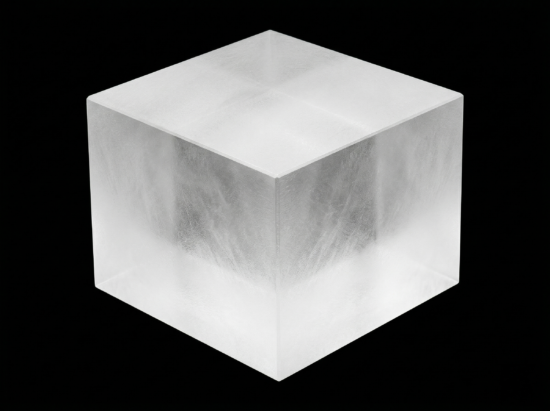
What Is NaI(Tl) Scintillation Crystal?
NaI(Tl) is thallium-activated sodium iodide. When gamma rays interact with the crystal, the material emits scintillation light that can be collected by a photomultiplier tube or another suitable photosensor. In many gamma spectroscopy systems, NaI(Tl) is valued because its emission around 415 nm is well matched to common bialkali PMTs.
The material is also well understood. Typical references report a density of about 3.67 g/cm3, light yield around 38,000 photons/MeV, and decay time around 230-250 ns. Energy resolution is often around 6-7% FWHM at 662 keV for well-made detector assemblies, although the final number depends strongly on crystal size, optical coupling, PMT quality, electronics and test conditions.
The tradeoff is moisture sensitivity. NaI(Tl) is highly hygroscopic, so a practical detector normally uses hermetic encapsulation, an optical window and a controlled reflector structure. For this reason, many projects source encapsulated NaI(Tl) scintillator rather than a bare crystal.
Pure NaI Crystal Scintillator vs NaI(Tl) Scintillation Crystal
Some buyers search for a pure NaI crystal scintillator when they are looking for a sodium iodide scintillation material. In most gamma spectroscopy applications, the practical material is NaI(Tl), which means thallium-activated sodium iodide. The thallium activator is what gives the crystal its useful scintillation performance, so NaI(Tl) should not be confused with completely undoped NaI.
In quotation discussions, “pure NaI crystal” may mean different things. It can mean a high-purity NaI(Tl) crystal, a bare crystal before encapsulation, or a sealed NaI(Tl) scintillator without PMT or electronics. If the project truly requires undoped sodium iodide for a special optical or research purpose, that should be stated clearly. For standard gamma-ray detection, isotope identification and radiation monitoring, NaI(Tl) is normally the correct scintillator material to review.
| Buyer Wording | Likely Technical Meaning | What to Confirm Before Quotation |
|---|---|---|
| Pure NaI crystal scintillator | Often means high-purity NaI(Tl) scintillation crystal, not undoped NaI. | Confirm whether thallium-activated NaI(Tl) is acceptable. |
| Bare NaI(Tl) crystal | Crystal component before final detector integration. | Confirm dry-box handling, immediate encapsulation and moisture protection. |
| Encapsulated NaI(Tl) scintillator | NaI(Tl) crystal sealed in a housing with optical window and reflector. | Confirm housing, window, size, energy resolution and optical output face. |
| NaI(Tl) detector | Sealed crystal plus PMT or other readout package. | Confirm PMT, connector, voltage divider, signal output and test requirement. |
Because NaI(Tl) is highly hygroscopic, a bare crystal requires proper dry handling and prompt encapsulation. For projects that need a sealed crystal package for integration with their own readout, review the general encapsulated NaI(Tl) scintillator and specify the housing, optical window and coupling interface.
Typical NaI(Tl) Properties for Detector Review
| Property | Typical Value | Design Meaning |
|---|---|---|
| Material | Thallium-activated sodium iodide, NaI(Tl) | Established inorganic scintillator for gamma and X-ray detection |
| Density | About 3.67 g/cm3 | Lower than BGO and LYSO, but adequate for many standard gamma detectors |
| Light yield | About 38,000 photons/MeV | Supports strong signal output and practical spectroscopy performance |
| Emission peak | About 415 nm | Good match for common bialkali PMTs |
| Decay time | About 230-250 ns | Suitable for many counting and spectroscopy systems, not a fast-timing material |
| Energy resolution | Often about 6-7% at 662 keV | Useful for isotope identification when the detector assembly is well optimized |
| Hygroscopicity | Highly hygroscopic | Hermetic sealing is normally required for reliable service life |
These values should be treated as typical engineering references. A final detector specification should be confirmed using the requested crystal size, housing design, photosensor and measurement method.
Where NaI(Tl) Is Still a Strong Choice
Gamma spectroscopy. NaI(Tl) is widely used for isotope identification, environmental radiation monitoring and laboratory gamma counting because it offers a strong balance of brightness, resolution and detector cost.
Radiation monitoring instruments. Survey meters, portable monitors and field instruments often use NaI(Tl) when sensitivity and mature PMT readout are more important than compact high-density stopping power.
Well logging and geological measurement. The material is commonly considered for downhole or geological systems where a sealed detector assembly can be matched to the required geometry and ruggedness.
Sample counting. Well-type NaI(Tl) designs can place small samples closer to the sensitive volume, improving geometric efficiency for certain counting workflows. See end-well NaI(Tl) scintillator when sample position is part of the detector design.
NaI(Tl) Crystal, Encapsulated Scintillator or Complete Detector?
Many RFQs use the same word, “NaI detector,” for different product levels. Before comparing quotations, it helps to separate the requirement into three layers.
| Requirement | Typical Product | What to Confirm |
|---|---|---|
| Crystal component | NaI(Tl) scintillation crystal | Diameter, thickness, surface finish, reflector and whether encapsulation is included |
| Sealed scintillator | General encapsulated NaI(Tl) | Housing material, optical window, leak-tight sealing, reflector and optical output surface |
| Complete detector: system-level scope | Sealed scintillator plus photosensor and associated readout components | Define the crystal-package interface separately from the photosensor, voltage divider and electronics |
| Custom geometry | Square, X-ray type, through-side well or end-well NaI(Tl) | Entrance window, active area, sample position, edge sealing and mechanical interface |
A sealed NaI(Tl) scintillator is a crystal package with an optical output interface. It should not be assumed to include a PMT, voltage divider, connector or readout electronics; state any additional assembly scope separately in the RFQ.
NaI(Tl) vs CsI(Tl) vs BGO
NaI(Tl) is often compared with CsI(Tl) scintillation crystal and BGO. The right material depends on the detector priority: energy resolution, density, readout method, moisture handling, cost or timing.
| Property | NaI(Tl) | CsI(Tl) | BGO |
|---|---|---|---|
| Typical light yield | About 38,000 photons/MeV | About 54,000 photons/MeV | About 8,500 photons/MeV |
| Emission peak | About 415 nm | About 550 nm | About 480 nm |
| Decay time | About 230-250 ns | About 1000 ns | About 300 ns |
| Density | 3.67 g/cm3 | 4.51 g/cm3 | 7.13 g/cm3 |
| Moisture behavior | Highly hygroscopic | Slightly hygroscopic | Non-hygroscopic |
| Common selection reason | Gamma spectroscopy and mature PMT-based detectors | Photodiode/SiPM-friendly emission and compact rugged designs | High density and compact stopping power |
For classic gamma spectroscopy, NaI(Tl) is still a practical first material to review. For compact detector volume or stronger stopping power, BGO or LYSO may be considered. For photodiode-coupled systems, CsI(Tl) can be attractive because of its longer-wavelength emission.
How to Specify NaI(Tl) for a Quotation
A useful NaI(Tl) RFQ should include more than diameter and length. The following details reduce back-and-forth and make the technical review more meaningful.
- Crystal size and geometry, such as 1×1 inch, 2×2 inch, 3×3 inch, rectangular block or well-type design.
- Whether you need a crystal component for your own encapsulation or a sealed NaI(Tl) scintillator package.
- Required entrance window, optical output window and housing material.
- Expected radiation energy range and whether low-energy X-ray response is important.
- The photosensor you intend to use, such as PMT, photodiode or SiPM, and its optical coupling interface.
- Target energy resolution, operating environment and any mechanical interface drawing.
For material-level selection, start from the NaI(Tl) crystal product page or the broader scintillation crystal category.
Provide diameter or block size, thickness, polished faces, reflector or window requirement, quantity and whether encapsulation is needed.
Provide crystal dimensions, housing outline, window material and clear aperture, optical output interface, operating conditions, quantity and inspection requirements.
The general encapsulated NaI(Tl) scintillator page covers sealed crystal packages. Review the crystal size, housing, optical window and output face before choosing a package for your instrument.
Ready to request a NaI(Tl) crystal quotation? Use the NaI(Tl) crystal inquiry form or the encapsulated NaI(Tl) inquiry form, depending on the required supply format. Include your application, crystal dimensions, encapsulation requirements, drawing and quantity. You can also email these details to sales@atrscintillator.com.
Related NaI Pages
For buyers moving from comparison to quotation, review the NaI(Tl) crystal product page for material selection and the encapsulated NaI(Tl) scintillator page for sealed crystal packages. Keep the crystal-package requirements separate from your photosensor and electronics specification.
Frequently Asked Questions
Is NaI(Tl) still worth choosing for new gamma spectroscopy projects?
Yes, when the project needs a mature and cost-effective gamma detector material with high light output and practical energy resolution. It is not the best choice for every compact or fast-timing detector, but it remains a strong baseline for many spectroscopy and monitoring instruments.
Why does NaI(Tl) need encapsulation?
NaI(Tl) is highly hygroscopic. Exposure to moisture can damage optical quality and reduce detector performance, so most practical NaI(Tl) products use hermetic housing, an optical window and reflector materials inside the assembly.
What size NaI(Tl) detector should I choose?
Common sizes such as 2×2 inch and 3×3 inch are selected according to sensitivity, energy range, counting efficiency and instrument size. Larger crystals improve detection efficiency but also affect weight, cost and optical uniformity.
Is NaI(Tl) better than CsI(Tl)?
Neither material is universally better. NaI(Tl) is often preferred for PMT-based gamma spectroscopy, while CsI(Tl) can be useful for photodiode-coupled designs, more compact layouts and applications where its emission wavelength is more convenient.
Can NaI(Tl) be used with SiPMs?
It can be used in some designs, but NaI(Tl)’s 415 nm emission has historically matched PMTs especially well. If a project uses SiPM readout, the sensor spectrum, coupling method, noise behavior and electronics should be reviewed before final material selection.