
Short Answer
Scintillation crystal selection starts with the detector requirement, not with a single material name. The best choice depends on radiation type and energy, required timing, energy-resolution target, detector size, readout sensor, operating environment, intrinsic background and packaging constraints.
Scintillation crystals such as LYSO(Ce), NaI(Tl), BGO, GAGG(Ce), CsI(Tl), LaBr3(Ce), BaF2 and CdWO4 each solve a different detector problem. A material that is suitable for PET timing may not be the best choice for low-background gamma measurement, X-ray imaging or laboratory spectroscopy.
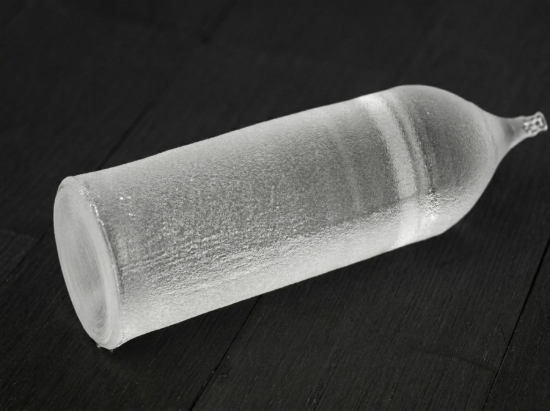
Confirm whether timing, stopping power, light output, energy resolution, low background or cost is the main system requirement.
Crystal size, surface finish, reflector, optical coupling, sensor response, packaging and array geometry can change final detector performance.
How to Choose a Scintillation Crystal
A practical selection process asks five questions before comparing data sheets:
- What radiation must be detected? Gamma rays, X-rays, beta particles, charged particles and neutrons may require different detector materials and system designs.
- What matters most? Fast timing, high stopping power, energy resolution, light output, large-area coverage, low background or compact geometry.
- Which photosensor will be used? PMT, SiPM, photodiode and other sensors have different wavelength-response and integration requirements.
- Is the material exposed to humidity or harsh handling? Hygroscopic materials need reliable hermetic packaging.
- Is the final part monolithic or pixelated? Arrays require pixel size, pitch, reflector, optical isolation and readout layout to be reviewed together.
Do not select a crystal from light yield alone. Crystal grade, dimensions, decay components, surface finish, optical coupling, sensor photon-detection efficiency, electronics and shielding all contribute to the finished detector result.
Quick Scintillation Crystal Comparison
| Material | Typical Selection Strength | Important Review Point | Common Starting Applications |
|---|---|---|---|
| LYSO(Ce) | High density and fast timing | Contains lutetium, so Lu-176 intrinsic background should be considered | PET, TOF-PET, compact gamma detectors and pixelated arrays |
| NaI(Tl) | High light output and widely established gamma detection | Hygroscopic; reliable hermetic encapsulation is required | Gamma spectroscopy, radiation monitoring and laboratory detectors |
| BGO | High density and strong gamma stopping power | Slower scintillation behavior than timing-focused materials | Compact high-energy gamma detection and shielding-limited detector designs |
| GAGG(Ce) | High light output, green emission and lutetium-free composition | Decay behavior and afterglow should be reviewed by grade and application | SiPM detector modules, gamma imaging, SPECT-related studies and compact detectors |
| CsI(Tl) | High light output and useful photodiode matching | Timing and moisture-protection requirements depend on the final system | X-ray imaging, CT, security inspection and photodiode-based detectors |
| LaBr3(Ce) | Fast response and strong spectroscopy performance | Hygroscopic packaging and intrinsic-background requirements must be considered | High-resolution gamma spectroscopy and fast timing detectors |
| BaF2 | Very fast scintillation component | The slow component and sensor spectral response are critical | Fast timing research and ultraviolet-sensitive detector designs |
| CdWO4 | High density and stable X-ray detection behavior | Slow response makes it unsuitable for every timing application | Industrial CT, X-ray imaging and security inspection |
Select a material name in the table to review its product specifications and quotation options.
These are engineering starting points, not universal performance guarantees. Request the specification for the proposed material and evaluate it against the complete detector design.
Material Selection by Application
PET and TOF-PET Detector Modules
LYSO(Ce) scintillation crystal is usually the first material to review for PET and TOF-PET because compact geometry, high density and timing performance are central to the application. For pixelated modules, also specify pixel size, pitch, reflector, array thickness and SiPM or PMT readout configuration.
Gamma Spectroscopy and Radiation Monitoring
NaI(Tl) remains a common starting material where high light output and established gamma-detector practice are important. LaBr3(Ce) may be reviewed when energy-resolution and timing performance are more important, while packaging and intrinsic-background requirements must be accepted. The final choice should include the required energy range, count rate, shielding and readout chain.
Compact High-Energy Gamma Detection
BGO and LYSO(Ce) are often reviewed when the detector needs high stopping power in a compact volume. BGO can be attractive where density is the main priority; LYSO is commonly reviewed where faster timing is also required. See the detailed LYSO vs BGO scintillator comparison before selecting by density alone.
SiPM-Coupled Gamma Detectors and Gamma Imaging
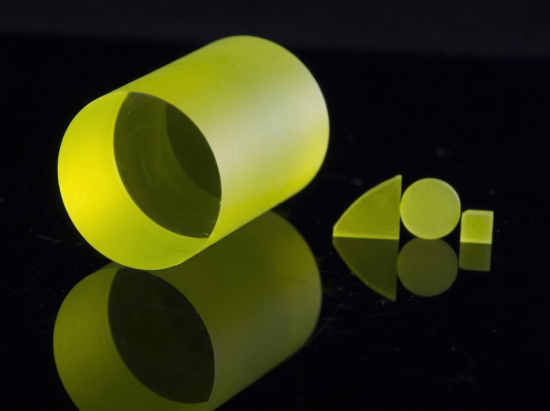
GAGG(Ce) scintillation crystal is often considered for green-sensitive silicon photosensors, high light output and lutetium-free detector designs. It can be useful for compact gamma detectors, gamma imaging and SPECT-related development, but the exact grade, decay behavior and afterglow requirement should be confirmed before quotation.
X-Ray Imaging, CT and Security Inspection
CsI(Tl) and CdWO4 are frequently evaluated for X-ray and CT-related detector designs. The useful comparison is not only crystal material: screen or array geometry, sensor type, X-ray energy range, afterglow requirement, frame rate and mechanical integration all affect the final imaging result.
Fast Timing Research
BaF2 is a specialized option when an ultrafast scintillation component is relevant. The detector must be designed around its spectral and decay characteristics; material-level decay time must not be treated as the same thing as finished detector timing resolution.
Readout Sensor Matching Matters
A crystal and photosensor should be evaluated as a pair. LYSO(Ce) is commonly associated with blue-sensitive PMTs and SiPMs, while GAGG(Ce) is often evaluated with sensors that retain useful green sensitivity. CsI(Tl), NaI(Tl), LaBr3(Ce), BGO and BaF2 also have different emission and integration considerations.
For a SiPM-based RFQ, include the sensor model or at least its wavelength-response range, active area, array layout, operating temperature and intended coupling method. A good material can still underperform if the optical chain is poorly matched.
Usually suitable for material evaluation, simple gamma detection, spectroscopy studies and single-sensor optical-coupling tests.
Usually required when the detector needs position information, multi-channel readout, defined pixel pitch or imaging performance.
Handling and Packaging Requirements
Non-hygroscopic materials such as LYSO(Ce), BGO and GAGG(Ce) are generally easier to handle than moisture-sensitive scintillators. NaI(Tl), LaBr3(Ce) and other hygroscopic materials require suitable hermetic packaging to protect optical performance.
For any custom part, specify whether the crystal requires an aluminum housing, optical window, reflector, wrapping, light guide, coupling face, entrance window or detector assembly. Mechanical packaging is part of the finished detector requirement, not an afterthought.
What to Include in a Scintillation Crystal RFQ
- Target application, radiation type and energy range
- Preferred material, or the performance requirement to be evaluated
- Crystal dimensions, tolerances, thickness and finished geometry
- Surface finish, polished faces, reflector, wrapping and optical-coupling requirements
- Photosensor type, detector layout and readout configuration
- For arrays: pixel size, pitch, array format, reflector and sensor matching
- Prototype quantity, production quantity and delivery destination
If the material has not been selected, send the detector requirement first. ATR Crystal can review whether LYSO(Ce), NaI(Tl), BGO, GAGG(Ce), CsI(Tl), LaBr3(Ce), BaF2, CdWO4 or another scintillator family is the appropriate starting point.
For a crystal or array quotation, email sales@atrscintillator.com with the material, dimensions, quantity and application. Attach a drawing if available.
Send a scintillation crystal RFQ or discuss a detector requirement
FAQ
Which scintillation crystal is best?
There is no universally best scintillator. The suitable material depends on the radiation, detector size, timing requirement, energy-resolution target, sensor, background requirement and packaging constraints.
Which scintillation crystal is used for PET?
LYSO(Ce) is widely used for PET and TOF-PET detector modules because it supports compact high-density geometry and timing-focused detector designs.
Which scintillator has high light output?
NaI(Tl), CsI(Tl) and GAGG(Ce) are commonly considered when strong light output is important. The final detector signal still depends on crystal grade, sensor response, optical coupling and electronics.
Which scintillator is suitable for SiPM readout?
LYSO(Ce), GAGG(Ce), CsI(Tl), BGO and other materials can be used with SiPMs. Compare the crystal emission spectrum with the selected sensor response and evaluate the full optical chain.
Do all scintillation crystals need encapsulation?
No. Hygroscopic materials such as NaI(Tl) and LaBr3(Ce) normally require reliable hermetic encapsulation. Non-hygroscopic materials may still need mechanical packaging, optical windows, reflectors or detector housings depending on the application.