
Short Answer
LYSO(Ce) and BGO are both dense, non-hygroscopic scintillators used for gamma-ray detection, PET detectors and compact radiation-instrument designs. The main tradeoff is clear: LYSO(Ce) offers much faster scintillation response and higher light output, while BGO offers high density, high effective atomic number and practical gamma stopping power.
Choose LYSO(Ce) scintillation crystal when timing, PET or TOF-PET performance, high count rate and strong photon statistics are the main priorities. Choose BGO when the project values high gamma stopping power, compact absorber geometry or a lutetium-free alternative and can accept lower light output and slower decay.
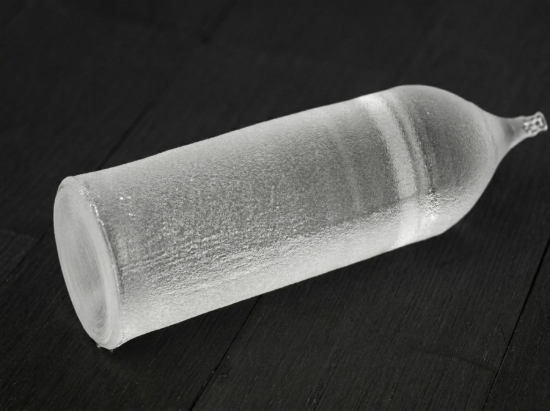
Why Engineers Compare LYSO and BGO
LYSO(Ce) and BGO can both stop gamma rays effectively in a compact detector volume because their densities are similar. The material decision usually changes when the detector needs to measure events quickly, obtain stronger light signals or operate with a specific photosensor.
LYSO(Ce) is a practical starting point for fast detector modules because it combines high density, relatively high light output and a decay time around the 40 ns class. BGO is slower, typically around the 300 ns class, and produces less light; however, it remains useful for gamma absorption, shielding, calorimetry and selected conventional PET or radiation-detection applications.
LYSO(Ce) vs BGO: Quick Comparison
| Property | LYSO(Ce) | BGO | Selection Note |
|---|---|---|---|
| Typical density | About 7.1-7.2 g/cm3 | About 7.13 g/cm3 | Both support compact gamma-detector geometry. |
| Effective atomic number | Lower than BGO | Higher because of bismuth content | BGO can be attractive where gamma stopping power is the main material priority. |
| Emission peak | Typically near 420 nm | Typically near 480 nm | Check the actual PMT or SiPM spectral response. |
| Typical light output | About 30,000 photons/MeV class | About 8,000-10,000 photons/MeV class | LYSO usually provides stronger photon statistics. |
| Typical decay time | About 40-45 ns class | About 300 ns class | LYSO is usually preferred for timing-oriented applications. |
| Hygroscopicity | Non-hygroscopic | Non-hygroscopic | Both are easier to handle than NaI(Tl) or LaBr3(Ce). |
| Intrinsic background | Contains lutetium and has Lu-176 intrinsic background | No Lu-176 intrinsic background | Total detector background still depends on the full system. |
These values are typical engineering references, not acceptance guarantees. Actual detector performance depends on crystal grade, size, polishing, reflector, optical coupling, photosensor, electronics and test method.
When LYSO(Ce) Is the Better Starting Point
PET and TOF-PET detector modules. LYSO(Ce) is widely used in modern PET systems because fast scintillation and relatively high light output support coincidence timing, compact detector geometry and high event-rate operation.
Fast timing and high count rate. Its shorter decay time makes LYSO more suitable when pulse separation, timing resolution or high-rate performance is central to the design.
SiPM and PMT readout chains designed for blue emission. LYSO(Ce) emission near 420 nm is compatible with many bialkali PMTs and blue-sensitive SiPMs. Always compare the crystal emission spectrum with the selected sensor’s photon-detection-efficiency curve.
Pixelated imaging arrays. LYSO(Ce) can be processed into small pixels and custom arrays for PET-like imaging geometry. The RFQ should include pixel size, pitch, reflector thickness, array thickness and sensor layout.
When BGO Is the Better Starting Point
Gamma stopping power is more important than fast timing. BGO has high density and high effective atomic number. It remains a practical material for gamma absorbers, calorimetry, shielding structures and selected compact radiation-detector designs.
Lutetium-free detector designs. BGO contains no lutetium, so it has no Lu-176 intrinsic background. This can be useful where that specific background source is undesirable. It does not mean a finished BGO detector has zero background.
Projects with less demanding timing requirements. BGO may be appropriate when the design can accept slower pulse decay and lower light output in exchange for its gamma interaction properties and material economics.
LYSO vs BGO for SiPM Readout
Both materials can be used with SiPMs, but they should not use the same design assumptions. LYSO(Ce) emits near 420 nm, while BGO emits near 480 nm. Select the sensor according to its photon-detection-efficiency curve, active area, temperature behaviour and package geometry.
BGO’s lower light output means optical coupling, reflector choice, sensor area and electronic noise can have a larger impact on low-signal performance. For either material, provide the exact SiPM model and detector geometry before finalizing the crystal specification.
Application-Based Selection Guide
| Detector Requirement | Usually Review First | Reason |
|---|---|---|
| TOF-PET or fast coincidence timing | LYSO(Ce) | Faster decay and higher light output. |
| Conventional PET or compact gamma imaging | Depends on timing and cost target | LYSO favours timing; BGO can remain relevant where timing requirements are less demanding. |
| Gamma absorber or calorimeter | BGO | High density and high effective atomic number. |
| Low-background design avoiding Lu-176 | BGO | BGO is lutetium-free. |
| Blue-sensitive SiPM or PMT chain | LYSO(Ce) | Emission near 420 nm is commonly used in timing detector modules. |
| Timing-sensitive compact gamma detector | LYSO(Ce) | Faster scintillation response and stronger light signal. |
The design needs PET or TOF-PET experience, fast timing, higher light output, compact pixels and a suitable blue-sensitive readout chain.
The design values high gamma stopping power, lutetium-free material and can accept slower timing and lower light output.
How to Specify LYSO or BGO for a Quotation
A qualified RFQ needs more than the material name. For monolithic crystals, provide dimensions, tolerance, polished faces, coupling face, reflector or wrapping requirement, sensor type, quantity and detector application.
For arrays, provide pixel size, pitch, array thickness, reflector material, reflector thickness, active area, sensor layout and any crosstalk or uniformity requirement. If the application is PET, include whether the priority is timing, energy resolution, depth of interaction, cost or detector geometry.
Review the LYSO(Ce) crystal product page for timing-oriented detector requirements. Review the BGO scintillation crystal product page for gamma-absorber geometries and lutetium-free material requirements. For a broader material decision, review the scintillation crystal selection guide before sending an RFQ.
FAQ
Is LYSO better than BGO?
Not universally. LYSO(Ce) is usually better for fast timing, TOF-PET and stronger light output. BGO can be better where gamma stopping power, lutetium-free material or less demanding timing requirements are more important.
Which material is better for PET, LYSO or BGO?
LYSO(Ce) is generally the preferred starting point for modern PET and especially TOF-PET because of its faster decay and higher light output. BGO can still be used in selected conventional PET or cost-sensitive designs.
Does BGO have intrinsic background like LYSO?
BGO does not contain lutetium and therefore has no Lu-176 intrinsic background. The full detector can still have environmental, electronic and material-related background contributions.
Can both LYSO and BGO work with SiPMs?
Yes. LYSO emits near 420 nm and BGO near 480 nm, so the selected SiPM’s wavelength response, active area and electronic noise should be reviewed for the chosen crystal.
Why is BGO slower than LYSO?
BGO has a typical scintillation decay time around the 300 ns class, while LYSO is commonly around the 40 ns class. This makes LYSO more suitable where pulse timing and high count rate are central requirements.