
YAG(Ce), also written YAG:Ce, is cerium-doped yttrium aluminum garnet used as a scintillation material in electron detection and imaging. For an electron microscope detector, selecting the crystal means specifying how electrons reach the screen, how light is collected and how the component fits the instrument. Material selection alone does not establish image resolution or detector service life.
ATR Crystal supplies YAG(Ce) scintillation crystals for configurations reviewed against your drawing and application requirements. This guide covers the details to include when discussing a crystal or screen component for an electron detector.
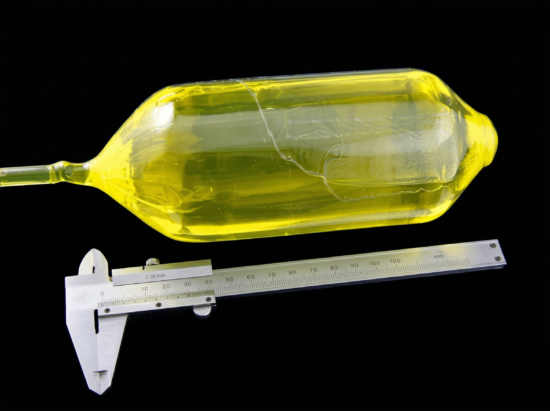
How a YAG(Ce) screen works in an electron detector
A scintillator converts incident electron energy into light that an optical sensor can detect. In a conventional Everhart-Thornley secondary electron detector, the signal passes through a scintillator, light guide and photomultiplier tube. The collector and accelerating field are part of the detector design; replacing the scintillator does not replace the complete detection system.
JEOL describes both secondary electron detection and the use of YAG detectors when fast backscattered electron response is needed. It also notes that silicon detectors are commonly used for backscattered electrons. These are different detection arrangements, so a YAG(Ce) component should be selected for the intended signal and instrument geometry rather than assumed to fit every SEM detector. See the technical references below for these detector principles.
Specify screen thickness, active area and support
YAG:Ce is one of the materials used for thin scintillation imaging screens. CRYTUR’s screen documentation identifies thickness, face parallelism, optical quality and the support arrangement as relevant screen specifications. Its published dimensions describe its own products and are not ATR Crystal manufacturing limits.
Start with a drawing that identifies the active area, overall dimensions, crystal thickness and tolerances separately. State whether the component is a freestanding screen, a part fitted into an existing holder or a crystal intended for bonding to a support. For a replacement part, include the original mounting details and distinguish the active opening from the overall component size.
Do not choose the thinnest screen solely on the assumption that it guarantees the best image. Review the required electron signal, optical collection and mechanical handling together. If thickness is not yet fixed, provide the instrument constraints so that the requested geometry can be reviewed before quotation.
Match the screen to the optical readout
Specify whether the light is collected by a PMT through a light guide, or by a camera, photodiode or other sensor through the intended optical path. CRYTUR identifies YAG:Ce and LuAG:Ce as imaging-screen materials with emission suited to photodiode or avalanche photodiode readout, while YAP:Ce emits in the ultraviolet. This makes the sensor and optical path part of material selection.
If you are comparing LuAG(Ce) scintillation crystals or YAP(Ce) scintillation crystals with YAG(Ce), provide the same operating conditions for each candidate. Record the readout model, optical interfaces and any required coating or surface treatment. A reference value from a material table is not a measured response for the complete detector.
Check vacuum conditions and service life requirements
A crystal’s material properties do not establish the vacuum compatibility or radiation lifetime of the finished assembly. State the vacuum conditions, operating temperature, expected beam exposure and any cleaning or bake-out procedure. If the assembly includes an adhesive, coating or support, identify those parts in the specification.
Define what acceptable operation means for your project: for example, an agreed dimensional inspection, optical inspection or response test under stated conditions. Where radiation exposure or vacuum operation is critical, agree on the required evidence before ordering. An unconditional claim such as “indestructible” or “perfect radiation resistance” is not an acceptance criterion.
What to include in a YAG(Ce) screen inquiry
Use the following checklist for a new design or replacement crystal. You can submit the information you already have and identify any dimensions or test conditions that still need review.
| Requirement | Information to provide |
|---|---|
| Detection task | Secondary electrons, backscattered electrons or another electron-beam imaging arrangement; describe where the crystal sits in the instrument. |
| Beam conditions | Relevant electron energies at the screen, beam current or exposure information, and continuous or pulsed operation where known. |
| Crystal geometry | Active area, overall shape, thickness, tolerances, openings and a drawing with units. |
| Mounting and support | Freestanding or supported construction, holder dimensions, contact surfaces and any existing assembly constraints. |
| Optical readout | Sensor model, light guide or imaging optics, the light-collection face and required interfaces. |
| Surface requirements | Faces to polish, specified surface quality, flatness or parallelism, and any requested coating. |
| Operating and acceptance conditions | Vacuum, temperature, cleaning or bake-out requirements, and the inspection or performance evidence needed. |
| Quantity and schedule | Prototype or production quantity, requested delivery date and the latest drawing revision. |
Send a YAG(Ce) crystal or screen inquiry with your drawing and available operating details. Dimensions, processing requirements and acceptance criteria are confirmed for the quoted configuration.
Technical references
- JEOL: Secondary electron detector and ET detector — detector construction and the role of YAG in electron detection.
- CRYTUR: Scintillation screens for low energy beam detection — screen materials, optical readout and support arrangements.
- Hamamatsu Photonics: Photomultiplier Tubes Handbook — Chapter 14, scanning electron microscopy and scintillator-to-PMT detection.