
Medical
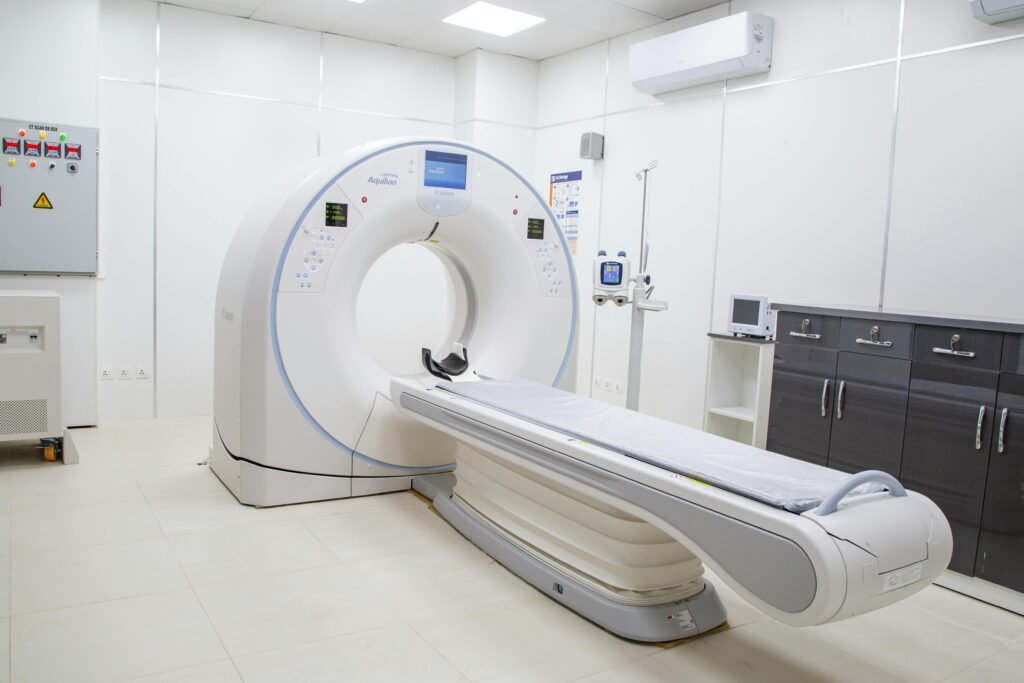
Elevating Medical Diagnostics: ATR Crystal Scintillators in Medical Imaging
Introduction
In the rapidly advancing field of modern healthcare, early detection and precise medical imaging are crucial for saving lives. At the heart of these life-saving technologies are high-performance detection materials. ATR Crystal is a leading manufacturer dedicated to providing premium Scintillation Crystals and customized Radiation Detector Assemblies to global medical device manufacturers, research hospitals, and clinical laboratories.
From high-resolution Positron Emission Tomography (PET) scanners to high-speed X-ray Computed Tomography (CT), our optoelectronic solutions are empowering the next generation of medical diagnostics with unparalleled clarity, speed, and accuracy.
Core Application Areas in Medical Imaging
1. Positron Emission Tomography (PET) & TOF-PET
PET imaging is essential for oncology, neurology, and cardiology. The performance of a PET scanner relies heavily on the stopping power, light yield, and decay time of its scintillator arrays.
Applicable Products: LYSO(Ce), BGO, and BaF2 crystals; Pixellated Scintillator Arrays.
The ATR Advantage: Our LYSO(Ce) crystals are the industry standard for modern PET systems, offering high density, exceptional light yield, and fast decay times for superior image resolution. For Time-of-Flight PET (TOF-PET) systems demanding ultra-fast timing resolution, our premium BaF2 scintillators deliver sub-nanosecond response times. We specialize in ultra-fine Pixellated Arrays perfectly matched to your specific scanner geometry.
2. X-ray Computed Tomography (CT) & Digital Radiography
CT scanners and flat-panel detectors require scintillators with extremely low afterglow, high X-ray absorption, and excellent radiation hardness to produce clear, artifact-free images while minimizing patient dose.
Applicable Products: CdWO₄, CsI(Tl), and GAGG(Ce).
The ATR Advantage: Our CdWO₄ crystals boast extremely low afterglow and high density, making them ideal for high-speed CT detectors. For digital radiography and dental imaging, our high-quality CsI(Tl) materials provide excellent conversion efficiency. The emerging GAGG(Ce) crystal offers a robust, non-hygroscopic alternative with immense light yield, ideal for advanced 4D X-ray imaging.
3. Single Photon Emission Computed Tomography (SPECT) & Gamma Cameras
SPECT imaging relies on large-area detectors to capture gamma-ray emissions, requiring materials with high energy resolution and uniform light output over large surfaces.
Applicable Products: NaI(Tl) and Encapsulated Scintillators.
The ATR Advantage: NaI(Tl) remains the most widely used material for SPECT and gamma cameras due to its high light output and cost-effectiveness. Because NaI(Tl) is highly hygroscopic, ATR Crystal provides meticulously crafted Encapsulated Scintillators with customized aluminum or titanium housings and optimal optical coupling, ensuring a long operational lifespan and stable performance in any clinical environment.
Why Partner with ATR Crystal for Medical Applications?
Precision Pixellated Arrays: We possess advanced precision machining capabilities to manufacture micro-pitch scintillator arrays with highly reflective separators (such as BaSO4 or ESR film), minimizing optical crosstalk and maximizing spatial resolution.
Seamless Detector Integration: To streamline your manufacturing process, we supply complete Scintillation Detector Assemblies. Whether you require coupling with traditional Photomultiplier Tubes (PMT) or modern Silicon Photomultipliers (SiPM), our ready-to-use modules ensure maximum photon detection efficiency.
Scalable Manufacturing: With over a decade of experience and deep expertise in crystal growth, we offer reliable, large-scale production capabilities to support both your R&D prototyping and high-volume commercial manufacturing needs.
Build the Future of Medical Imaging with Us
Discover how ATR Crystal’s one-stop scintillator solutions can enhance the sensitivity and resolution of your medical imaging systems.